
14 MARCH 2026
Here's the mistake most people make: they walk into a showroom, see a big fridge with nice shelves, and buy it without measuring their kitchen. Then it arrives and either doesn't fit through the doorway or sticks out past the counter by fifteen centimetres.
Start with the space, not the fridge. Measure the width, depth, and height of where the unit will go — and leave about 5cm on each side and 10cm at the back for ventilation. A fridge pushed flush against the wall runs hotter and works harder, which means higher bills and a shorter compressor life.
For capacity, the rough math is simple. A couple without kids can get by with 200–250 litres. A family of four typically needs 300–400 litres. If you cook in bulk or buy groceries weekly instead of daily, go bigger. And if you're considering a separate freezer — say, for a catering business or just because you like keeping three months of frozen chapati dough — a chest freezer is almost always a better value per litre than a combo unit's freezer compartment.
One more thing: door swing. A right-hinged door that opens into a wall is fine. One that blocks the kitchen entrance every time someone grabs milk is not. Some models let you swap the hinge side during installation. Check before you buy.

28 FEBRUARY 2026
Every appliance blog tells you to "clean the condenser coils." Fair enough — it's good advice. But if you've ever tried to reach the coils at the back of a fridge that's wedged between a wall and a cabinet, you know it's not exactly a quick job. So let's talk about the stuff that actually makes a difference without requiring you to move furniture.
First: check the door seal. Run your finger along the rubber gasket. If it's cracked, peeling, or doesn't snap shut magnetically, you're leaking cold air 24 hours a day. Replacing a seal costs a few hundred rupees and takes ten minutes. The energy savings pay for it within a month.
Second: don't pack the fridge to the ceiling. Cold air needs to circulate. If every shelf is crammed with containers touching the back wall, the unit works overtime to keep everything at the right temperature. Leave some gaps.
Third: set the thermostat correctly. Most domestic fridges run well at 3–4°C for the main compartment and -18°C for the freezer. Colder isn't better — it's just more expensive. And if your fridge has a separate humidity control for the vegetable drawer, actually use it. That slider exists for a reason; leafy greens last noticeably longer at high humidity.
11 FEBRUARY 2026
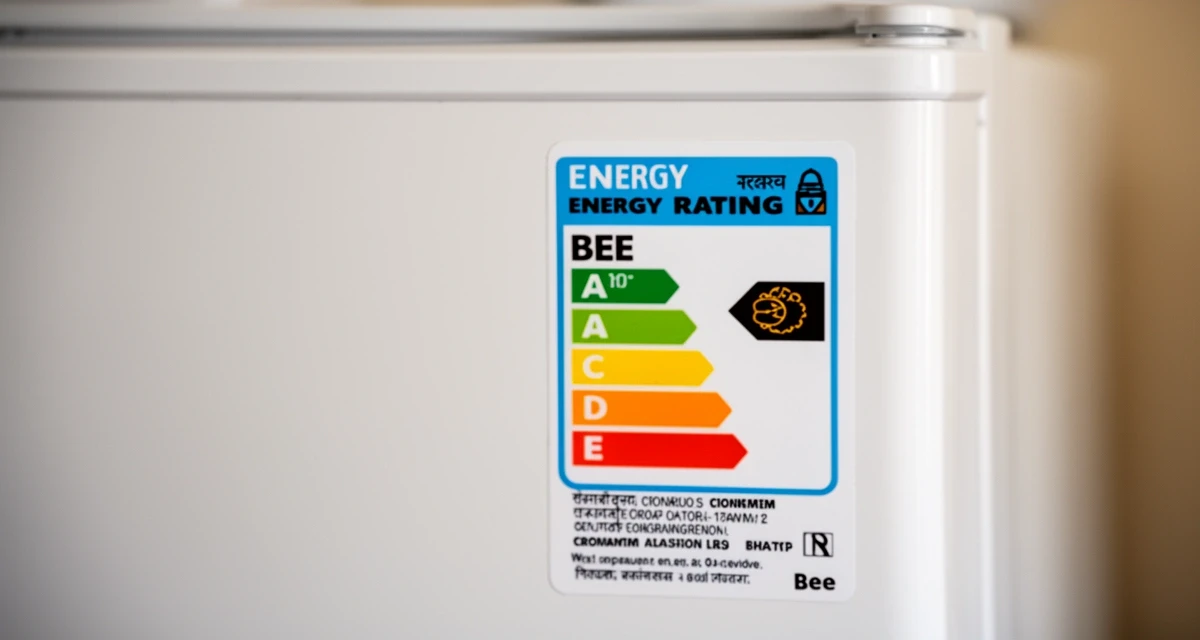
A 5-star BEE rating on a fridge sounds like it's the cheapest to run. Usually it is — but not always, and the difference between stars is often smaller than you'd think.
The rating measures energy efficiency relative to the fridge's size. A 5-star 500L fridge uses more total electricity than a 3-star 200L fridge. The star tells you how efficiently it uses power for its volume, not how much power it uses in absolute terms. So if you're buying a bigger fridge than you need because it has a higher star rating, you might end up spending more on electricity, not less.
The BEE label also lists the estimated annual energy consumption in kilowatt-hours. Multiply that by your electricity rate per unit (check your last bill — in Mumbai it's roughly ₹8–12 per kWh depending on your slab) and you'll get a ballpark annual running cost. A typical 300L frost-free double door uses about 250–300 kWh per year. At ₹10 per unit, that's ₹2,500–3,000 a year, or roughly ₹200–250 per month. Not nothing, but also not the budget-breaker some people fear.
Direct-cool fridges (the ones with manual defrost) use less electricity than frost-free models because they don't run a defrost heater. If you don't mind defrosting the freezer every few months, they're the cheaper option to operate. Trade-offs everywhere.